



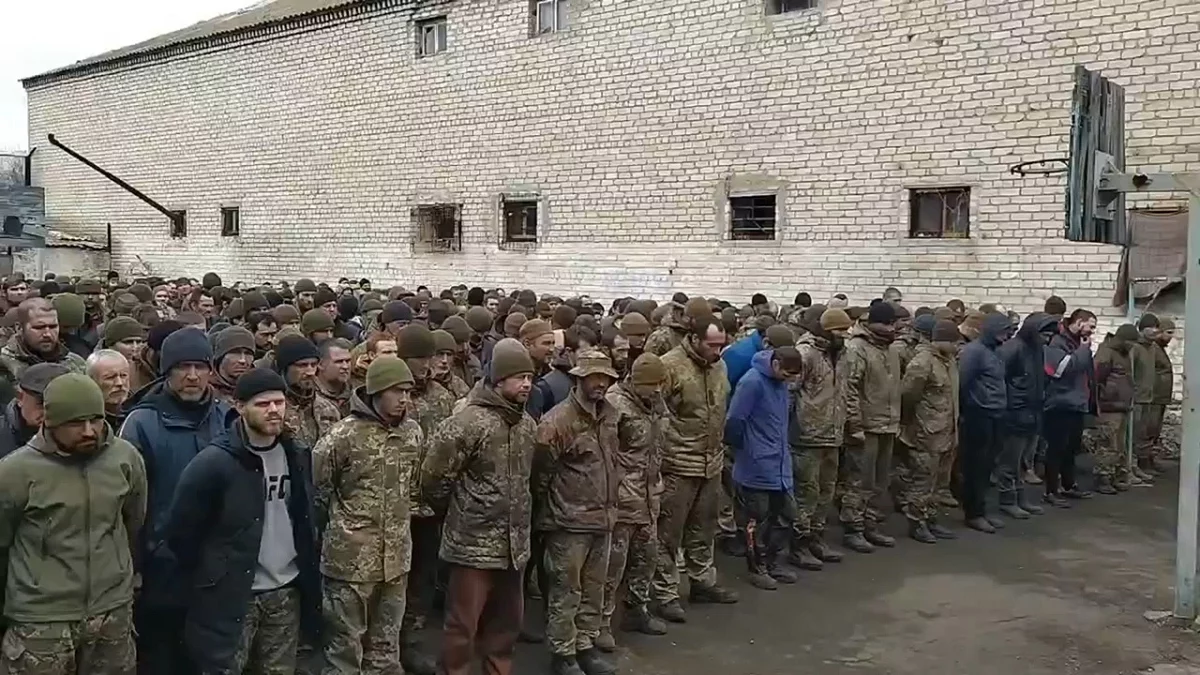
A fresh report from the American newspaper The New York Times highlights the plight of Ukrainian civilians who ended up in Russian prisons following the full‑scale invasion. According to the article — which devoted its cover to the plight of the captive Ukrainians — hundreds of people — men and women, many of them civilians — were detained in occupied territories and then transported to Russian penal colonies and pre‑trial detention centers, where they disappear for months, even years. The journalists note that the conditions of detention and treatment make today’s system “eerily reminiscent of the Gulag.”
The piece documents allegations that Ukrainian civilians are often held in jails without formal charges and deprived of contact with their families. Relatives receive no official information about their whereabouts, while detainees reportedly face hunger, regular beatings and psychological pressure. Witnesses say that these civilians — now under Russian custody — vanish into a world defined by hunger and violence. Even if peace is reached, addressing the fate of Ukrainian citizens imprisoned in Russia will remain extremely difficult.
Human rights advocates emphasize that the secrecy of Russian detention facilities makes it nearly impossible to verify the conditions of confinement or to formally confirm the detainees’ status. International organizations estimate that the modern Russian prison and detention system increasingly resembles late‑Soviet repressive practices — marked by arbitrary arrests, lack of transparency and mounting evidence of torture.
Experts warn that even with a peace agreement, the release of Ukrainian civilians currently in Russian prisons may remain one of the most challenging items on the agenda. Many do not qualify for standard prisoner exchanges and have no formal legal status that would allow them to start the process of returning home. According to human rights defenders, what is urgently needed is sustained international oversight, collection and preservation of testimonies and pressure on Russian authorities to grant access to detainees.
For now, these people continue to live in silence, without law or protection — and the longer the world remains silent, the more real the shadow of a new Gulag becomes in Russia.