



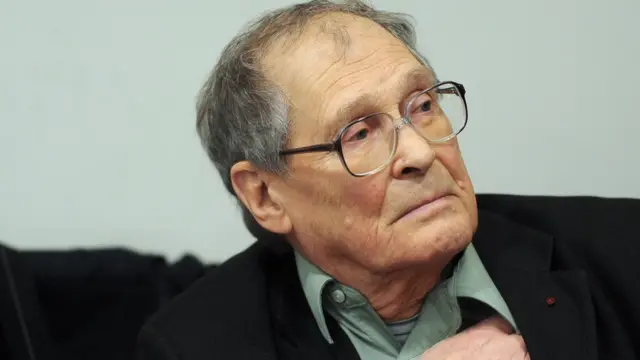
Thirty years ago, on January 24, 1996, Soviet dissident and human rights defender Sergei Adamovich Kovalyov published an open letter to Russian President Boris Yeltsin and announced his resignation from all positions within the presidential structures. This was not a personal protest, but a principled break with a government that Kovalyov no longer considered democratic or governed by the rule of law:
I can no longer work with a President whom I do not consider either a supporter of democracy or a guarantor of the rights and freedoms of the citizens of my country.
For several years, Kovalyov had consciously cooperated with the state, believing such cooperation was possible as long as the authorities moved toward freedom, legality, and honesty. By the mid-1990s, however, he concluded that a different choice had been made — in favor of violence, arbitrariness, and secrecy. His letter publicly marked the line beyond which cooperation becomes complicity.
At the heart of the letter was the responsibility of the authorities for dismantling legal institutions and for treating violence as a legitimate political tool. Kovalyov directly linked the events of October 1993 to the war in Chechnya, describing them as stages of the same process: the abandonment of the rule of law and the devaluation of human life. His resignation was a conscious refusal to serve as moral cover for this system. Kovalyov, as a former political prisoner of the Camp Perm 36, warned:
You are restoring the old Stalin–Brezhnev swamp, only with communist phraseology replaced for now by anti-communist rhetoric. Your successors will correct this shortcoming.
Thirty years later, Kovalyov’s letter reads not as a document of its time, but as a warning that went unheeded. Russia has arrived precisely where he cautioned it would: thousands of political prisoners jailed for their beliefs and anti-war positions; severed ties with the world and growing isolation; and an unjust, aggressive war against Ukraine, marked by war crimes and open contempt for human life. The state once again stands above the law and above the individual, while violence has been normalized as policy.
Kovalyov’s text remains a rare example of personal responsibility and a publicly drawn moral boundary — a reminder that compromise with baseness always has consequences, even if they become fully visible only decades later.
To the text of the open letter