



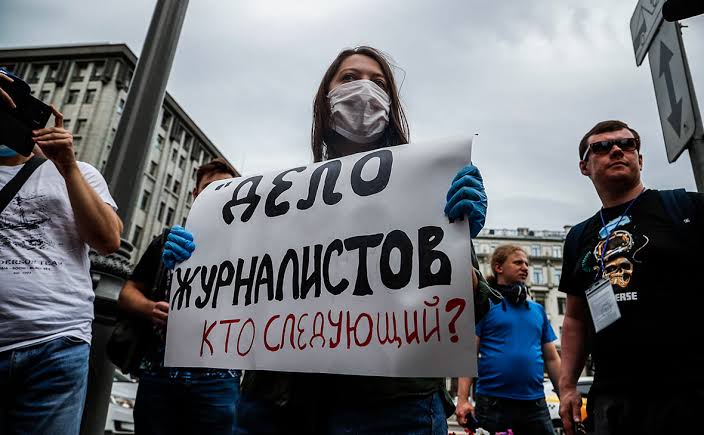
Russia’s systematic assault on freedom of speech continues. Independent journalists and editors are repeatedly targeted in criminal and administrative cases, labeled “foreign agents,” arrested in absentia, or placed on wanted lists. Professional journalistic work — investigations, publications, and public commentary — has effectively been equated with criminal activity by the authorities.
Since the first days of the war against Ukraine, Russian officials have increasingly used placement on wanted lists as a tool of pressure against journalists. Lists of so-called “particularly dangerous criminals” now include editors, reporters, and managers of major independent media outlets. Among those affected are representatives of Meduza, Mediazona, Important Stories, The Insider, Novaya Gazeta Europe, the TV Rain channel, and other independent media organizations.
Foreign journalists have also become targets of this campaign. Employees of CNN, RAI, Deutsche Welle, ABC News, and France 24 have reportedly been placed on wanted lists. According to human rights defenders, the number of journalists subjected to repression is already measured in dozens and continues to grow.
In the latest World Press Freedom Index compiled by Reporters Without Borders, Russia ranks 171st, placing it among the countries with the most severe restrictions on freedom of speech.
One illustrative example of the state’s policy of intimidation is the decision to place Roman Badanin, founder and editor-in-chief of the investigative outlet Proekt, on a wanted list. The official grounds for this decision have not been disclosed. Previously, Badanin faced multiple administrative charges under Russia’s “foreign agent” legislation, while Proekt’s editorial office was subjected to police searches.
Taken together, these developments demonstrate that in contemporary Russia journalism is no longer regarded as a socially important profession or a fundamental pillar of democracy. Instead, it is increasingly treated as a form of dissent to be suppressed.