



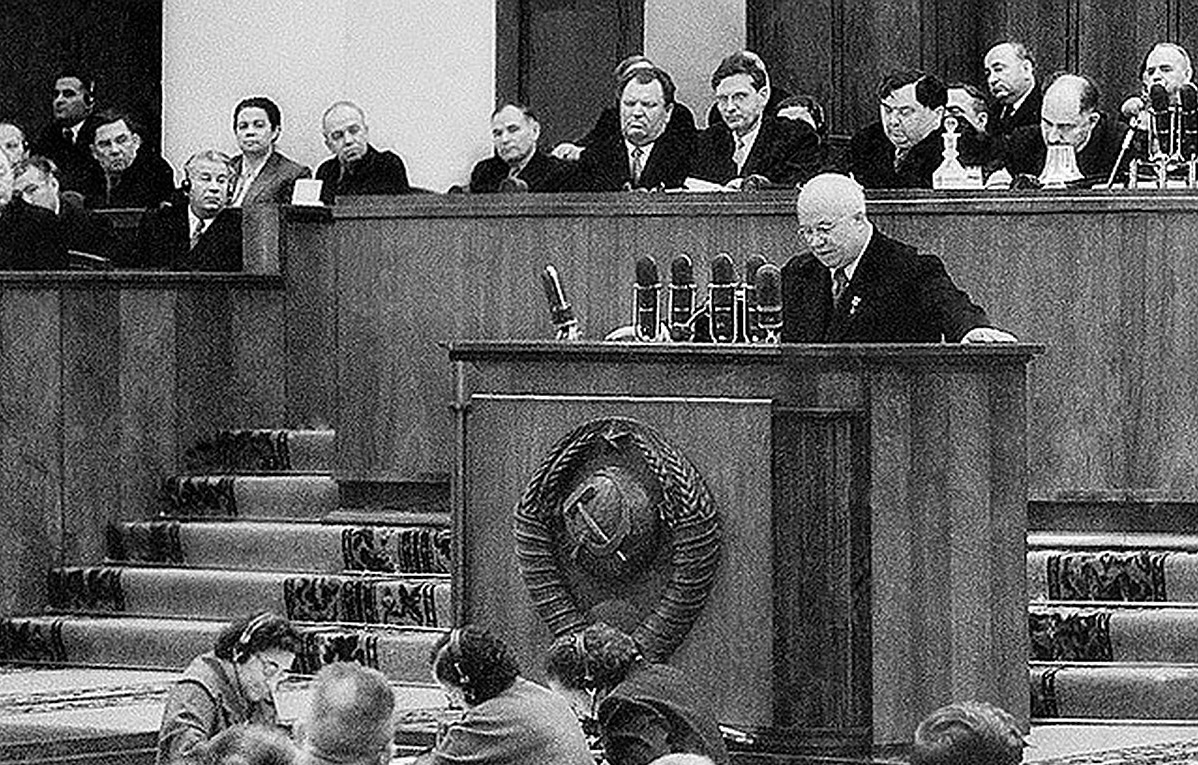
On 25 February, seventy years marked the moment when, at the 20th Congress of the Communist Party of the Soviet Union, First Secretary Nikita Khrushchev delivered his closed report “On the Cult of Personality and Its Consequences”.
The speech became one of the defining events of the twentieth century. For the first time at the highest party level, the mass repressions, terror, and lawlessness of the Stalin era were publicly condemned, along with the system of unchecked personal rule itself.
In today’s Russia, however, the anniversary passed almost unnoticed. The author of the report was largely absent from the official agenda, and the date itself did not trigger public discussion—neither by the state nor within civil society.
Khrushchev’s report spoke directly to core human rights issues. It described how the label “enemy of the people” became a universal justification for repression; how “confessions” were extracted through torture; and how arrests and executions were carried out without trial or due process. The document cited evidence of the mass destruction of party and Soviet officials, fabricated criminal cases, and an atmosphere of pervasive fear that underpinned state governance.
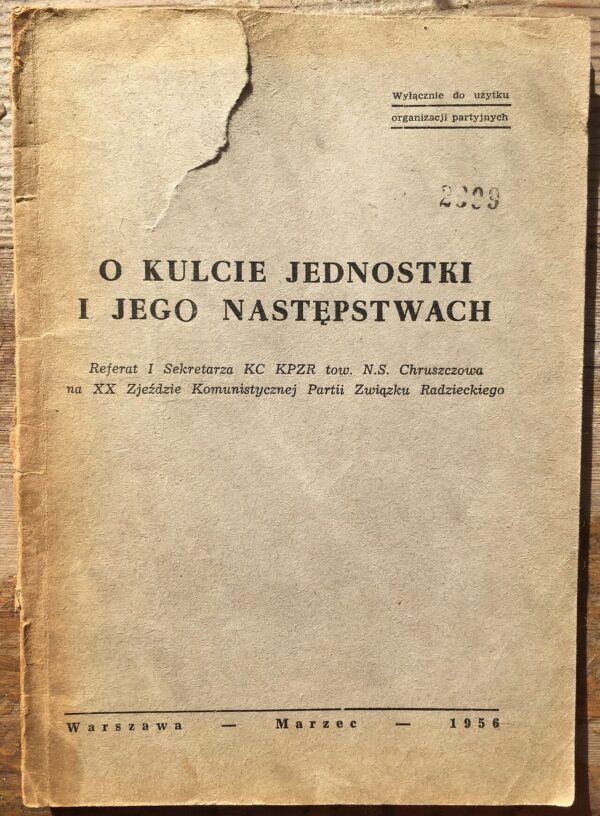
“On the Cult of Personality and Its Consequences,” Polish edition, March 1956, for internal party use
Today’s silence around the anniversary is telling. Russia’s public discourse increasingly reflects a positive reassessment of Stalin, while critical engagement with repression and state responsibility for mass crimes fades into the background. Recent sociological data show that public sympathy for Joseph Stalin remains high, while Khrushchev—associated with an attempt to break with terror and the cult of personality—is viewed ever more negatively or ignored altogether.
This shift is shaped in part by the stance of the current authorities, including Vladimir Putin, whose views on Soviet history set the tone for the official narrative. Within this framework, Khrushchev is often cast as a mistaken or damaging figure, while the logic of personalist power itself goes largely unchallenged.
The forgotten anniversary of Khrushchev’s speech is more than a missed date. It signals a deeper problem: the suppression of memory about state terror, the avoidance of reckoning with repression, and the replacement of historical accountability with the glorification of the past. For the human rights community, remembering this moment remains vital—as a reminder of where the cult of personality and the impunity of power ultimately lead.