



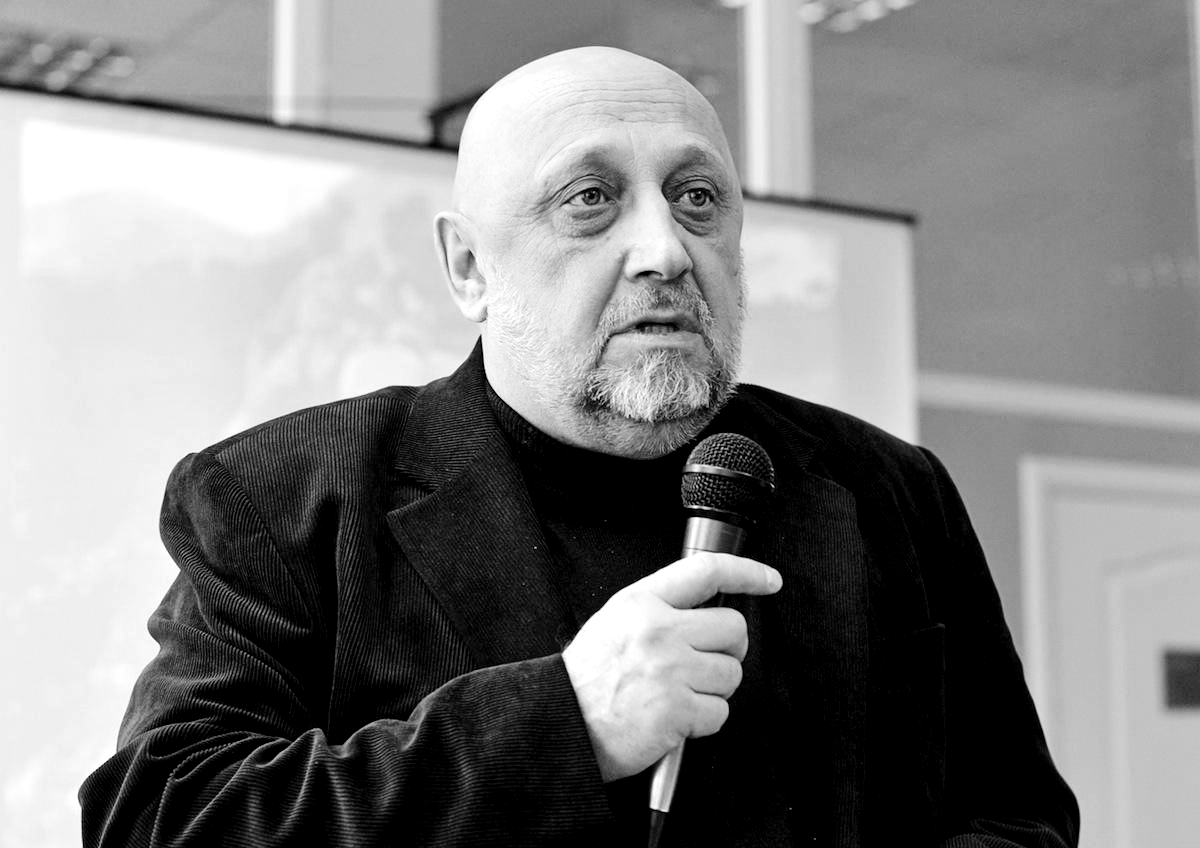
On 19 December 2025, Viktor Alexandrovich Shmyrov passed away. This is a tremendous loss for the human rights community across all of Russia and a deeply personal loss for each of us—the members of Perm Memorial.
For us, Viktor Alexandrovich was not merely an outstanding scholar, an unyielding and principled human rights defender, and a museum professional of international stature; for us, he was a Teacher. Viktor Shmyrov was the person who opened the eyes of many of us to the history of political repression in the Soviet Union—whether during our student years or in the volunteer camps of the Perm-36 Museum.
He belonged to the generation of the founding fathers of Perm Memorial, and throughout the entire history of our organization we walked alongside him, on the same course, along parallel paths that, contrary to the laws of Euclid, constantly intersected.
Viktor Shmyrov was a key figure for historical scholarship in the Kama region and especially for the museum field. He directed the Cherdyn Museum—a treasury of ancient artifacts in the north of Perm Krai. He headed the History Department of the Perm Pedagogical Institute. He published dozens of scholarly works. Yet his principal creation was the Perm-36 Museum—the only museum in the world dedicated to political repression located on the site of a former GULAG camp.
Together with his companion, like-minded partner, and pillar—his wife, Tatyana Georgievna—and with a team of young volunteers, Viktor Shmyrov restored the old corrective labor camp literally log by log. Years later, Perm-36 became a powerful center of civic education and the formation of civil society. From 2007 to 2012, the Pilorama Civic Forum was held there, bringing together discussions, lectures, exhibitions, concerts, and theatrical performances. Former dissidents, human rights defenders, and representatives of museums of conscience from all over the world gathered there.
Students and schoolchildren came as well… This proved dangerous for Russia’s strengthening dictatorship, and in 2013 the museum was destroyed. Formally, it still exists, but today it is merely a nominal, box-ticking institution fully controlled by the state.
Viktor Alexandrovich died on the eve of his birthday. He was meant to turn 79. Not a particularly advanced age for a person of the 21st century, yet all who knew Shmyrov and his family are amazed that he lived even this long.
Because he was being killed. Systematically, consistently, with relish, over many years. He was persecuted, deprived of the right to work and to speak. Not only by the authorities: many colleagues—Russian museum professionals—readily joined in the persecution, and that was especially painful.
Four heart attacks, repeated open-heart surgeries. He stood on the brink of clinical death, yet time and again he recovered: willpower plus intellect are a tremendous resource for survival. He lived for his creation—Perm-36—which in these difficult years has been reborn as a virtual museum of the history of political repression. He worked on this project until his final days.
The project must be continued and completed. And it will be completed.
…And he also lived for his family. A wife such as Tatyana Georgievna and sons such as Andrey and Alexander were his reward for all the hardships he endured—and a reward truly worthy of him.
The loss of Viktor Alexandrovich is, first and foremost, their immense personal tragedy.
It is also a profound injustice. He dreamed of returning to Perm-36 as the rightful ideological leader of this center of civic enlightenment, but that dream did not come true. Well, dreams are often unattainable—that is their frequent nature; that is why they are dreams.
Yet science is a precise, unemotional thing that demands a sober view of reality. History is also a science, and it tells us that sooner or later everything falls into place: all geniuses and all villains are named and take their places in the heaven or the hell of humanity’s memory. Viktor Shmyrov will be recognized as a hero of resistance to the Russian dictatorship and will become a banner for those who continue this struggle.
He will not, of course, live to see this—but he knew it for certain: he was a historian, and history judges and explains everything.
Today we are living through the bitterest days for Perm Memorial. We remember Viktor Alexandrovich; we remember our youth, years filled with hope and far-reaching plans.
Today Perm Memorial mourns and weeps together with Tatyana Georgievna, Andrey, and Alexander Shmyrov. We continue our work—though now from abroad, in exile—continuing to speak about human rights, to reveal the truth about Russian history, and about Russia today.
We will not stop.
Thank you, Viktor Alexandrovich.
Perm Memorial