



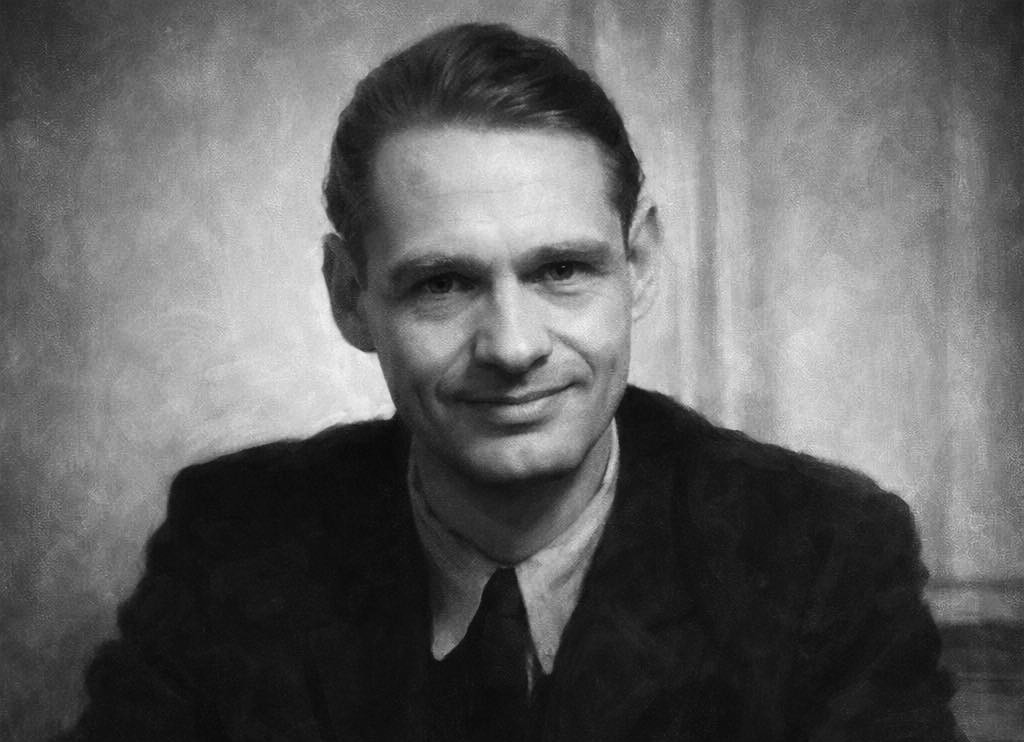
27 January marks the birthday of Oleksa Tykhyi — a man who proved through his own fate that true freedom begins with inner honesty. A Ukrainian human rights defender, thinker, and educator, he died in a prison hospital in Perm in 1984, showing the world that dignity can be stronger than fear. He did not seek the role of a hero — he simply could not live by half-truths.
Today in Ukraine, Oleksa Tykhyi is remembered by his associates and students not only as an outstanding dissident and human rights advocate. He is remembered as a Teacher — someone who never received a university chair, yet left behind a far more important lesson: a lesson in responsibility, culture, and human dignity.
Born in the rural depths of Donetsk Region in 1927, Oleksa Tykhyi became a graduate of the Faculty of Philosophy at the country’s leading university — Moscow State University. Early on, he understood that culture without language loses its future, and education without freedom loses its meaning. He dreamed of being a school teacher in a system where the development of the individual matters more than ideology, where critical thinking is valued above obedience, and where history and culture form the foundation of education.
He received his first sentence at a young age — for an open civic stance and a refusal to accept the imitation of choice as a norm. Further arrests, labor camps, and exile followed. Even in the harshest conditions, Oleksa Tykhyi remained a person of word and thought.
After returning from imprisonment, he was forced to take on heavy physical labor, yet continued to reflect on the fate of Donbas, the rupture of cultural continuity, and the urgent need to restore the Ukrainian language to education and public life.
In 1976, Tykhyi became one of the co-founders of the Ukrainian Helsinki Group. Already on 5 February 1977, he was sentenced again — to a term that effectively left little chance of return.
During imprisonment, his health deteriorated rapidly. On 18 April 1979, on the 17th day of a hunger strike, he suffered a bleeding ulcer. He was transferred to a hospital only 18 hours later — the camp authorities called his condition “simulation.” Before surgery, the surgeon demanded a written renunciation of his previous activities. Tykhyi responded by accusing them of blackmail and once again refused to compromise his principles.
After the operation, he remained unconscious for a long time. His stomach was stitched in a way that made eating a constant source of pain, and severe complications developed. Even in this condition, Tykhyi did not sign a single “repentant” statement.
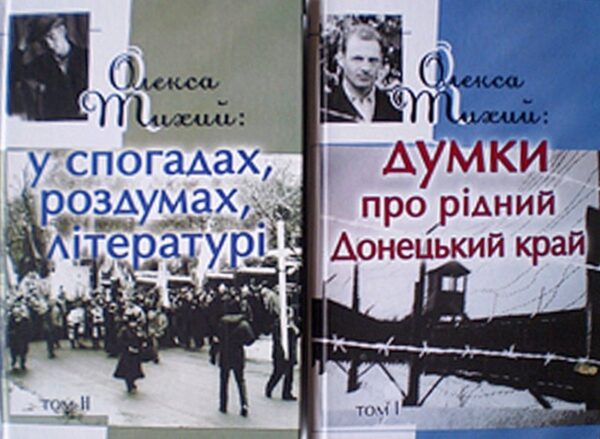
In 1980, he was transferred to Perm-36, a special-regime labor camp in the village of Kuchino, Perm Region. In 1982, his book Reflections was published in the United States. Meanwhile, cynical and false publications appeared in the Soviet press, accusing Tykhyi of “treason,” while he himself was dying in prison conditions from an ulcer, atherosclerosis, anemia, hepatitis, and other serious illnesses.
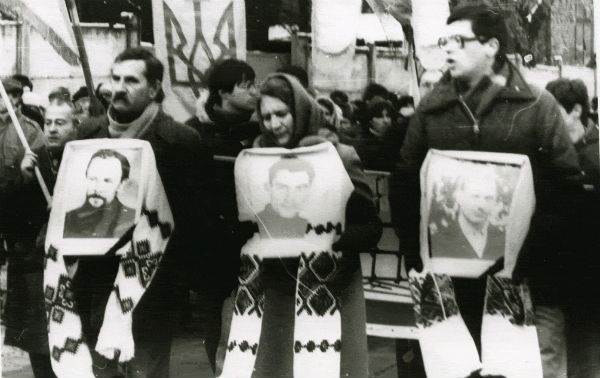
On 6 May 1984, Oleksa Tykhyi died in a cell of the prison hospital in Perm. His son was not allowed to retrieve the body. Only in 1989 were Oleksa Tykhyi’s remains transferred to Kyiv and reburied with honors at Baikove Cemetery, alongside the remains of Vasyl Stus and Yurii Lytvyn.
Even in the final months of his life, despite severe illness, Tykhyi did not renounce his beliefs. Fellow prisoners remembered him as a man who reflected deeply on philosophy, pedagogy, and the future of the Ukrainian people.
Oleksa Tykhyi never headed a university department. But he left future generations something that cannot be censored or erased — a lesson of freedom, responsibility, and human dignity, one that remains profoundly relevant today.