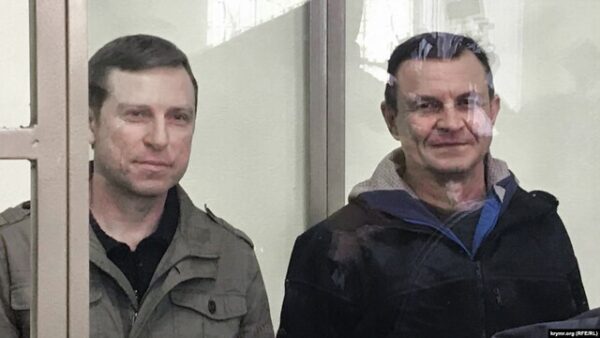



In 2026, it will mark ten years since the arrest of Sevastopol residents Dmytro Shtyblikov, Oleksiy Bessarabov, and Volodymyr Dudka. On November 9, 2016, they were detained by Russian security services and later convicted in a case widely regarded by human rights defenders as fabricated.
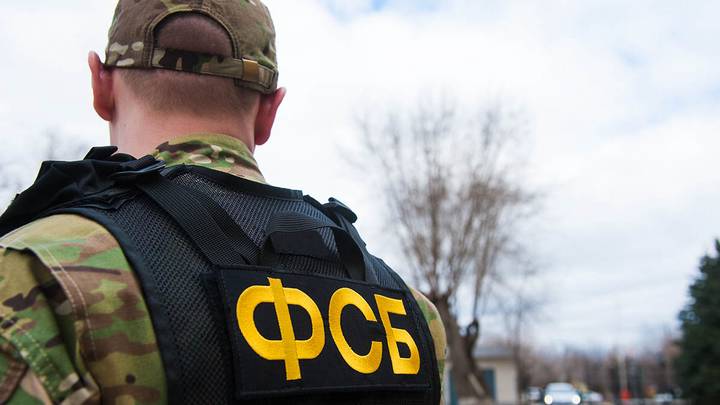
The arrests took place simultaneously in different parts of Sevastopol. Dmytro Shtyblikov was seized on his way to work by unidentified men in plain clothes and forced into a minibus. That same day, officers of the FSB detained Volodymyr Dudka, who was heading to a clinic, as well as Oleksiy Bessarabov. Official information about the detainees only appeared a day later, when charges were brought against them in the Leninsky District Court of Sevastopol, accusing them of preparing acts of sabotage and illegal possession of weapons.
At the same time, state-controlled media circulated reports about a “group of Ukrainian saboteurs” allegedly planning attacks on military and civilian infrastructure. Broadcasts featured staged footage of “searches” showing the seizure of equipment, weapons, and documents. Independent experts pointed out inconsistencies: among the alleged “evidence” were items resembling airsoft equipment.
All three men had served in the Ukrainian Navy before 2014 and, after leaving service, remained in Sevastopol. Dmytro Shtyblikov and Oleksiy Bessarabov were associated with the Nomos analytical center, which focused on regional security and European integration. Following the beginning of Russia’s occupation of Crimea in 2014, the organization ceased its activities, refusing to re-register under Russian law.
Volodymyr Dudka, who was not connected to Nomos, worked in munitions disposal. According to colleagues, he may have been included in the case to lend it greater credibility.
The defendants reported torture and pressure during the investigation. In particular, Volodymyr Dudka described in a complaint to the Investigative Committee the use of electric shocks, death threats, and coercion to memorize and repeat “confessions” on camera.
The trials were marked by numerous procedural violations. In 2018, the case against Dudka and Bessarabov was returned by the court to prosecutors due to insufficient evidence. However, the charges were later revised, and on April 4, 2019, both men were sentenced to 14 years in prison.
Earlier, on November 16, 2017, Dmytro Shtyblikov had been sentenced to five years in a high-security penal colony. He was later charged again, this time with “espionage” and “high treason.”
Appeals filed by the defendants, citing fabricated evidence and serious investigative violations, were rejected by the Supreme Court of Russia.
Human rights defenders note that the cases of Shtyblikov, Bessarabov, and Dudka are part of a broader pattern of persecution in annexed Crimea. Since 2014, accusations of terrorism, sabotage, and espionage have been systematically used to pressure disloyal groups, including Crimean Tatars, pro-Ukrainian activists, and former Ukrainian servicemen.
Today, nearly a decade later, Dmytro Shtyblikov, Oleksiy Bessarabov, and Volodymyr Dudka remain imprisoned. Human rights organizations continue to call for their release and stress the need for sustained international pressure to end politically motivated prosecutions in Crimea.
The Memorial Human Rights Center has recognized two of the three Sevastopol residents—Volodymyr Dudka and Oleksiy Bessarabov—as political prisoners.