


I always wanted politics to stay out of my life. I wanted there to be sport, joy, and art. But at some point, I felt that harmony around me was broken, there was more evil. It required my intervention — I could not remain indifferent.”

I always wanted politics to stay out of my life. I wanted there to be sport, joy, and art. But at some point, I felt that harmony around me was broken, there was more evil. It required my intervention — I could not remain indifferent.”
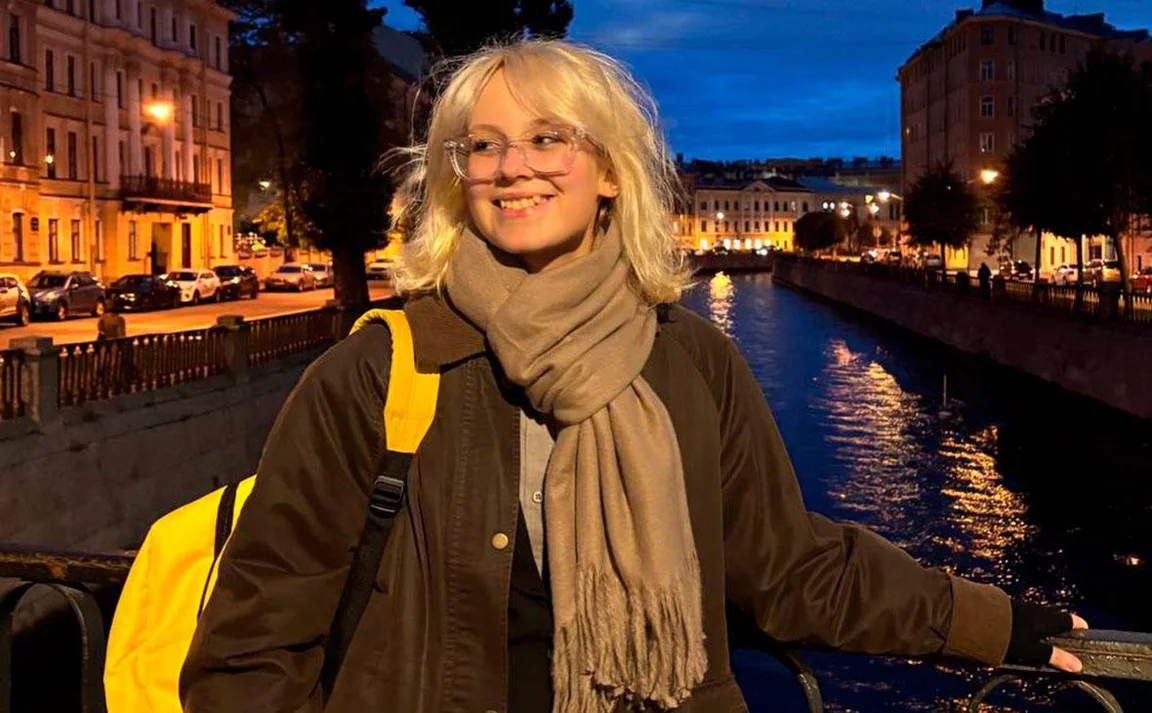
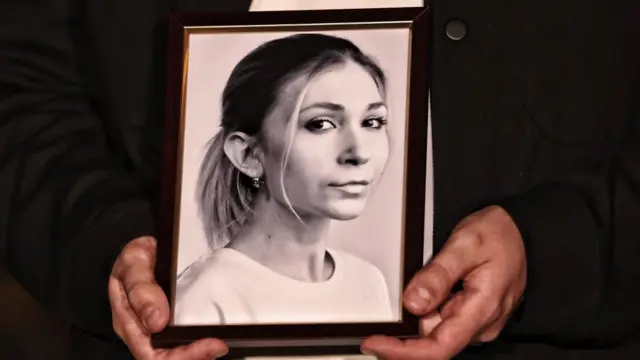
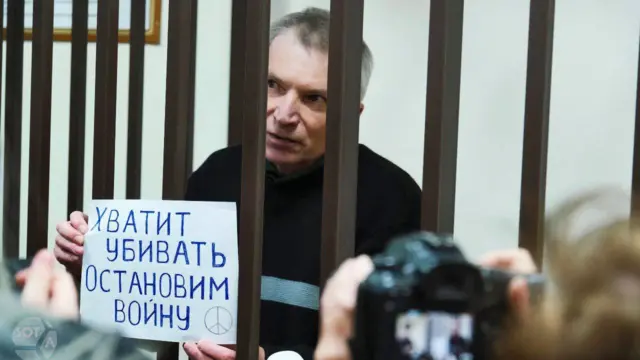
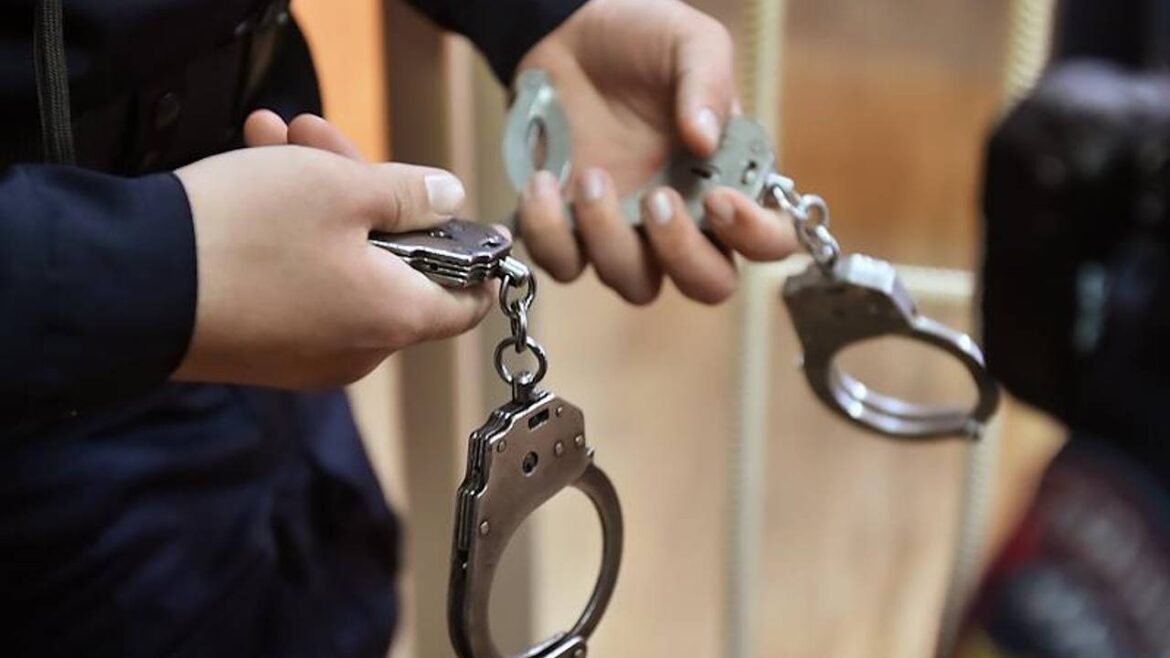
On August 28, the Lenin District Court of Perm ordered the detention of Irina Faizulina, wife of civic activist and human rights defender Artem Faizulin from Berezniki. She will remain in pre-trial detention until October 15, 2025. The day before, security forces searched the couple’s apartment, seizing two laptops, three mobile phones, and all bank cards. According to her husband, Irina is suspected of transferring money to the Anti-Corruption Foundation (FBK).
At the investigator’s request, the court session was held behind closed doors. The presiding judge was Maria Yakutova.
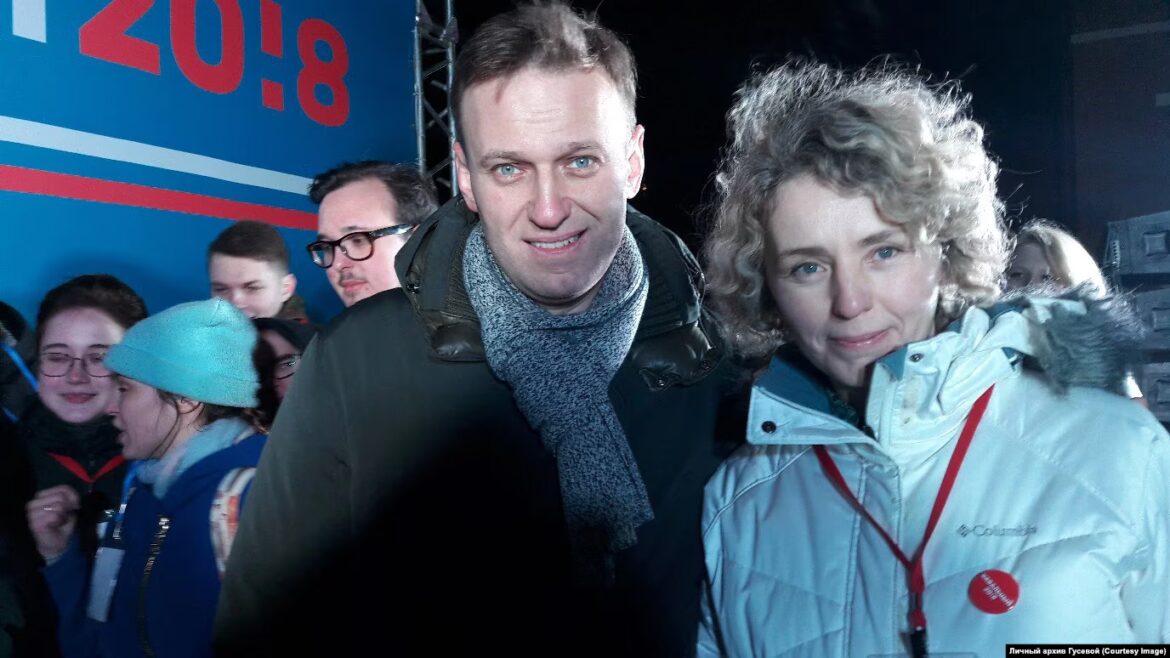
Artem Faizulin, a former lawyer with Alexei Navalny’s Perm office, called his wife’s arrest “a perverse act of cruelty” and emotionally commented to Perm 36.6:
I desperately want to be there instead of her, but they don’t give me that opportunity… They could have found plenty of pretexts to lock me up. But they locked her up. Right now, I honestly don’t know how to live with this.”
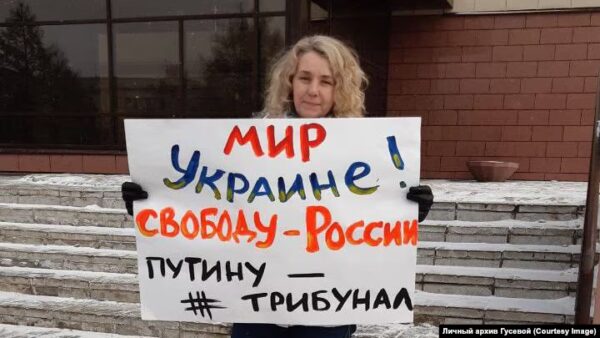
The activist believes the authorities are using his wife’s arrest as leverage against him. Faizulin has previously been targeted by law enforcement. He was dismissed from the Interior Ministry for his sympathies toward Alexei Navalny, later became a human rights defender, and ran a channel monitoring repressive practices in Russia. He has collaborated with major rights projects, including OVD-Info, and also ran for local office, though unsuccessfully. His wife Irina had also been engaged in civic activism.
On August 25, 1968, one of the boldest actions of the Soviet human rights movement took place. On Moscow’s Red Square, a group of Soviet dissidents openly protested against the invasion of Czechoslovakia by the USSR and other Warsaw Pact countries.
The demonstration included poet and human rights activist Natalya Gorbanevskaya, physicist and social activist Pavel Litvinov, writer Larisa Bogoraz, poet Vadim Delone, philologist Viktor Fainberg, engineer Konstantin Babitsky, and student Tatyana Baeva. Their banners read: “For your freedom and ours” and “Hands off the Czechoslovak Socialist Republic!”
Known as the “Demonstration of the Seven”, the protest lasted only a few minutes before all participants were beaten and arrested. Five were sentenced to imprisonment, while two were subjected to compulsory psychiatric treatment.
The echo of their action reached across the world. The Prague newspaper Literární listy wrote at the time:
Seven people on Red Square — at the very least, seven reasons why we can never hate Russians again.
The participants themselves were fully aware of the risks. Larisa Bogoraz later stated: We wanted to show that there are people in the Soviet Union who think differently.”
Resistance was not limited to Moscow. In Perm labor camps, at least twenty individuals were later imprisoned for protesting the invasion of Czechoslovakia. Among them were Ukrainians Zoryan Popadyuk and Yaromyr Mykytka, who had been arrested in the Lviv region for distributing leaflets stating:
Do not believe the false statements of Soviet radio. The armies of the USSR, Poland, GDR, Hungary, and Bulgaria are aggressors, not defenders of socialism in the ČSSR. No one requested intervention. Soviet troops entered the ČSSR against the will of the people, the Communist Party, and the government, to install a puppet regime (Dubeček, Černík, Šmíd, and others were arrested). There were no threats to socialism or conservatism in the ČSSR. The occupiers act brutally toward protesting citizens, arresting intellectuals, composers, poets, and writers. Condemn the military intervention. Protest!

Leaflet of Zoryan Popadyuk. 1968. Ukraine
Every word written or distributed was treated as a crime, and every leaflet became a reason for prosecution.
The memory of the “Demonstration of the Seven”, of Ukrainian dissidents Zoryan Popadyuk and Yaromyr Mykytka, and hundreds of other prisoners of conscience remains alive today. Archives, museums, and human rights initiatives continue to preserve their stories as a reminder of the cost of freedom of speech and civic courage. Across the world, commemorations are held every year on August 25 in their honor.
For us, this is not only a historical date but also a reminder: even in the darkest times, there are people who refuse to remain silent. Their voice is the voice of a future where truth triumphs over fear.
A Russian teenager, Arseny Turbin, will celebrate his seventeenth birthday in a juvenile correctional colony in the Perm region, where he has been sentenced to five years in custody.
He is accused of distributing anti-Putin leaflets in 2023, allegedly under the direction of handlers from the Freedom of Russia Legion—a group banned in Russia. However, the schoolboy admitted to distributing them but told the court he acted out of his personal convictions, not at someone else’s behest. The FSB also claims that Turbin completed a “questionnaire in Telegram” to join a terrorist organization and sent it through an unspecified method—a claim Arseny denies.
Human rights defenders from the group “Support for Political Prisoners. Memorial,” after reviewing Turbin’s case, recognized him as a political prisoner:
The case against the minor Turbin is politically motivated and aimed at intimidating society as a whole.

It is often said in Russia that writing to political prisoners is merely symbolic, an empty gesture. But as many “prisoners of conscience” have said—and as Arseny’s mother confirms—letters from both loved ones and strangers help sustain them through the hardest days of confinement. We hope for active participation from residents of Perm Krai and all compassionate people.
Address for letters and cards to Arseny Turbin:
Турбину Арсению 19.08.2008 г.р.
Адрес: 614512, Пермский край, с. Гамово, ул. Свободы, д. 1, ФКУ Пермская воспитательная колония ГУФСИН России по Пермскому краю.
Please write letters, cards, and the address only in Russian.
Read more: The Arseny Turbin Case.
The Leninsky District Court of Perm has remanded Leonid Melekhin in pretrial detention. Previously, Melekhin was denied political asylum in the United States and deported from the country.
In Russia, a criminal case has been opened against the Perm resident under the article on justifying terrorism. The specific charges against him remain unknown. At the request of the FSB investigator, he is held in custody until September 25.
Leonid Melekhin applied for political asylum in the United States last summer after crossing the US-Mexico border but was refused. He spent several months in a US immigration detention center. After the court upheld the denial of his asylum claim, he was deported.
Before leaving Russia, Melekhin, an active civic figure, was repeatedly held administratively liable for participating in protest actions. In June 2023, he held a solo picket in Perm with a sign reading “Freedom for Navalny.” He was detained, taken to a police station for questioning, and then released.
In 2024, Melekhin was declared wanted and later added to the list of “terrorists and extremists” by Rosfinmonitoring.
Dzerzhinsky District Court of Perm has arrested former director of the PERMM Museum of Contemporary Art, Nailya Allakhverdieva, in absentia. She has been placed on the international wanted list, Meduza reported today.
A criminal case for insulting the religious feelings of believers (Part 1 of Article 148 of the Russian Criminal Code), triggered by several works from the museum’s collection, was opened against the ex-director of PERMM in March this year. According to the investigation, Nailya Allakhverdieva “understood that the works might offend believers, yet allowed their free display.” Notably, these works include Tatiana Anoshina’s Blue Cities, Sergey Gorshkov’s Angel with a Trumpet, and Konstantin Zvezdochetov’s Paradisi, which were exhibited at the museum in 2011–2012.
Everyone in Perm — young and old alike — knows that since almost the museum’s inception, Nailya Allakhverdieva has been the brain and driving force behind the unique PERMM project, renowned far beyond Perm and Russia for its avant-garde creative art practices. Thanks to her, PERMM is not some provincial institution but one of Russia’s leading museums in its field. How is the news of Nailya Allakhverdieva being declared wanted compatible with all this?! — co-founder of the “Perm-36” museum Tatiana Kursina reacted indignantly to the court authorities’ decision.
Nailya Allakhverdieva is a well-known Russian art manager, curator, artist, and laureate of the Sergey Kuryokhin Prize. She worked with the PERMM Museum of Contemporary Art for over ten years and became its director in 2019. In November 2024, she was subjected to a search in connection with a case involving the gallerist and PERMM co-founder Marat Gelman, who has been added to Russia’s registry of “terrorists and extremists.” In December of last year, Nailya resigned as PERMM director, stating she had “fully implemented her plans for the museum’s development.” Later, she left Russia.
The Perm-36 team expresses its strong support for our colleague, the talented art manager Nailya Allakhverdieva. Nailya, we are with you!
Photo: Evgeny Ivanov
The Perm Regional Court has sentenced 35-year-old photographer Grigory Skvortsov to 16 years in a high-security penal colony on charges of treason (Article 275 of the Criminal Code) related to a publicly available book about Soviet bunkers. His support group reported the verdict.
The prosecutor had requested an 18-year prison sentence.
Skvortsov denied the charges, calling them “absurd.”
The Perm resident was detained in November 2023. For a long time, his relatives did not know the nature of the accusations. In 2024, Skvortsov wrote in a letter from the detention center to the “First Department” that he was accused of treason because he allegedly gave the American journalist a book titled Soviet “Secret Bunkers”: Urban Special Fortifications of the 1930s–1960s by historian Dmitry Yurovkov. The book is based on declassified information about Soviet fortification structures.
Later, the photographer clarified that although the book was mentioned in the case, he did not give the journalist the book itself. According to Skvortsov, he found online schematics showing the locations of special facilities that had been publicly available for decades “with the connivance of the FSB and GUSP.” He noted that these schematics remain freely accessible on the internet. He also purchased from Yurovkov, the author of the work on bunkers, photographs of declassified archival documents included as additional materials to the book. These materials were promoted by Yurovkov’s friends in their blogs and in the Russian Newspaper.
In the end, Skvortsov gave the journalist the photos he bought from Yurovkov and the schematics he found online. He said he intended to share this information with the public but, after learning about the authorities’ interest, forbade the journalist from publishing the data.
“The investigator ignored my testimony that I did not use the book itself, only the additional materials. He still sent the book for examination, not the electronic document,” the photographer said. According to him, the investigator claims that Skvortsov himself created the “electronic schematic” rather than finding a ready-made plan showing the locations of special sites.
The photographer reported that after his arrest, security forces beat him, forced him to say on camera whom he had sent the data to, and themselves “suggested” the journalist’s name. Skvortsov also said they extracted passwords for his devices from him.
Grigory Skvortsov is an opponent of the war. During the investigation, he was held in the Moscow pretrial detention center SIZO-2 “Lefortovo.”
Source: OVD-Info
Additional information: BBC

Заключенные ИТК-35 Г. Приходько и М. Никлус после освобождения (г. Тарту, 1988 г.)
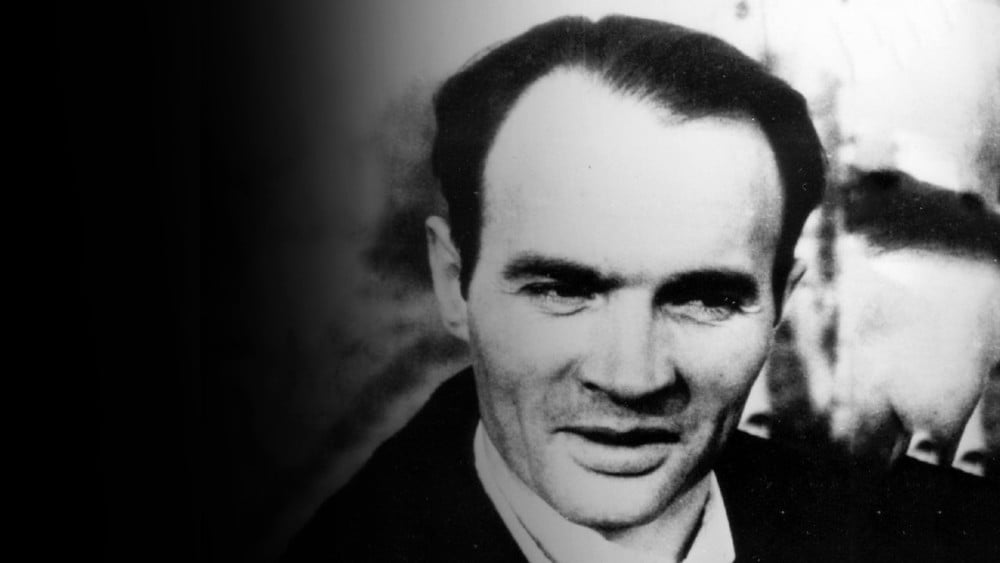
Viktor Shmyrov, telling of how the convicts arrived at the Perm-36 political camp, likes to mention the Estonian Mart Niklus, an ornithologist by profession, who identified the approximate location of the camp by the singing birds. Somewhere in the Urals.
Now this story is a legend. So is Mart Niklus, a well-known Estonian human rights activist.
In 2010, Mart Niklus was an honorary guest at Pilorama, where museum staff interviewed him during a tour of the museum’s special-regime area.
Read it. It’s still very topical today. Maybe even more topical than yesterday.
– March, tell me, was your first time in Mordovia?
– The first time, yes.
– Were you in prison at the same time as Anatoly Marchenko?
– Yes. And in the Vladimir prison with him, too. But he was in a different cell, so I didn’t know much about him.
I was also in jail with such famous people as Sharansky – in the same Vladimir prison, but he was also in a different cell.
Who else? Julius Daniel – with him in Mordovia.
And the last time with Levko Lukyanenko. He was sentenced to death, then they gave him life. A humane attitude to a man. Then he became the Ambassador of Ukraine in Canada.
– You never met him again?
– I did. At a conference in Kiev. It was very touching, we celebrated his 80th anniversary there.
Back in May of this year, I met with Ovsiyenko, he also promised to come to “Pilorama”, but they did not let him in, they took him off the train. He was banned from Russia. And we skipped it. Because we got ourselves a tourist visa. First we showed him the invitation we got from here. We were told: No, this is not good, there is no stamp, and the purpose of the trip is not explained, we will not give you a visa. And then one wise man said: fools, go to the tourist bureau and ask for a tourist visa to Russia. Well, I think I’ll be the first one to be refused. But it worked.
But this does not mean that we were immediately in Russia. We went through all these searches and stuff… And if they found any literature that we brought here, they would confiscate it right away and send us back.
– What were you given your last sentence for?
– For anti-Soviet activities, of course.
– How long were you in here?
– They gave me ten plus five, I did more than eight.
– Did you know who was in the neighboring cells?
– Of course, we knew in general.
– And how? In what way?
– On walks, we would meet each other. Sometimes in the bathhouse where we could talk and pass letters.
– But there were shields and partitions, everything was blocked off! How did you manage?
– They even managed to smuggle letters abroad. Though the guards were very careful. When they saw you sitting at the table and writing something, they would immediately open the cell and demand to see what you were writing. I said that I had the right to write a letter to my relatives. And the warder said, “And I have the right to check at any time what you are writing, and since I don’t know your language, we’ll send it to the KGB, and the KGB will decide.
So you had the right to write as much as you wanted, and he had the right to check as much as he wanted…
– Who were you with in the cell?
– Vasil Stus.
– What was your impression of him?
– Very nice. I wrote my memoirs about him, I have them with me. “It’s good to twist screws under the native Soviet power. The wardens are thieves, each one tearing you apart. Lenin, like a lunatic, gave us the convoy of the glorious CPSU.” This is Stus. I asked him: “What, Vasil, do you write humorous poetry?” “No, just ironic!” He was composing them while he was working.
– Tell us about your time in Perm-36.
– In winter they let us out to shovel snow, there was a lot of snow, the wardens didn’t want us to, the prisoners chased us away. They said, do you want to go for a walk for half an hour? But we had to clear the snow. They gave us this instead of a walk. We worked and went back to the cell.
– And when they took you out for a walk there were no fences?
– There were, there really were. Sometimes we tried to pick dandelion leaves, you know, they are edible, young leaves. The wardens would stop right away, they thought we were trying to poison ourselves. They didn’t know the leaves were edible. They ate them instead of lettuce.
– When they took us out for walks, were there two wardens watching both walks or one?
– It depends, it could be one, it could be two. If they talked, they went straight back to the cell. The wires (letters) were thrown over the wire on the ceiling in the exercise cell when the warden turned away when he got tired of looking at us. If they noticed that I threw them over, they would take us straight to the cell.
– Was there a punishment for that?
– Of course, they could deprive us of our parcels and forbid us to correspond. By the way, none of my letters in Estonian reached my mother. They were all taken away by the Tallinn KGB and destroyed.
– Was one of the cells a quarantine cell?
– One, or even more, were used as needed. There were even punishment cells. The bunks were only lowered for the night, they were raised during the day, and you had to sit there. When I came here in the fall of 1988, two months after my release, they found Stus’ inscription on the boards here, he was tortured to death here.
– In a work cell?
– Yes. I don’t know exactly, I was already gone. I was here as a prisoner, and he was here as a worker, because those who were in solitary confinement also had to work. You always had to, because “work doesn’t punish, it corrects. One had to “redeem oneself before the Motherland by honest work, honest work and exemplary conduct” – that’s what they said to a man with a higher education.
– Were the stools bolted down?
– Yes, because otherwise you could punch the warden in the forehead. That’s why there were two doors. You open the outer one so that the inner one was still closed. Worse than the animals in the zoo.
Moreover, I was not allowed to dress. We were only allowed to wear underwear: a shirt, pants, and a striped tiger skin… We called ourselves “knights in tiger’s clothing”. It was still very cold in winter, the walls are very thin, it was a former garage or cattle yard. And you always had to sit by the radiator and huddle up to keep warm.
– Is this where you sat?
– No, this is the shower, but only the warders washed here.
– Where were you washed then, if there was a shower here for the warders?
– Everyone was taken to the baths, both us and the solitary.
– How much time did you have to wash in the bathhouse?
Half an hour for washing and washing. They were constantly pushing us. At least there were no bedbugs here, there were in Mordovia.
Well, you’ve probably had enough of these prison stories by now. Now will you tell us how the authorities treat your activities?
– The local authorities have partly taken the path of “correction,” and we are not talking about the central authorities. In this respect, Perm stands somewhat apart from other regions. The fact that this museum is working, and that the government supports and partially finances it and even Pilorama, is a big deal, of course.
– You changed your mind, made the right conclusions. Eternal honor to you for what you did. In Estonia, on the contrary, they try to silence, suppress and forget. They say you have to look to the future and not dig in the past!
– Were you taken down the street or to the barracks?
– In the street. Prisoners worked in the bathhouse as stokers, they did laundry and even ironed. There were some warehouses here, things were stored back then. And this is where the people who were in the general cells worked.
– Were there wardens here?
– Yes, it was called the guardhouse. The working and living cells were opposite each other. Here was the kitchen, where the prisoners worked, too, and carried aluminium bowls with trays.
– Why two rooms in the kitchen?
– You should ask Gayauskus, he worked in the kitchen. He was a very good cook. From the humble materials we had – potatoes and cabbage, we made very tasty things. We sometimes praised it, we said that even at home we did not eat like that.
– Did they give you extra?
– Sometimes we did, if you made more. In this respect it was maybe even better here than in other places. We knew very well where the good prison was and where the bad one was. Here in Sosnovka in Mordovia, for example, they feed us very well.
– And here, in comparison to others?
– People in the minimum security were able to live, but those in the punitive regime were given hot meals only every other day.
There were some delicate stories with the doctor, too. They would not let you see the doctor by yourself, the guard was always with you. When you went to work, you were shmoled, both when you went there and when you went back. “Strip naked!” I answered that I would only strip naked in front of the doctor, not the guards. Then they would tear my clothes off and draw up a report that I had physically resisted the clothing inspection. And that could happen several times a day. When they took me to work, from work to lunch, back to work and back to the cell after work. We used to call it a punitive striptease.
– Did the boss also talk to you? Do you remember who?
– Sure, right after you arrived. Dolmatov. I even have a picture of his grave. He was overworked, that’s probably why he died.
– Say, you’re an ornithologist, aren’t you?
– Yes. Sometimes I can even hear birds singing through the windowpane here, which don’t exist in Estonia.
– When did you first come here, at what time of year?
– In winter, I think. The trial was in January, and I think I arrived here around March.
– You were on hunger strike when you were brought here, right?
– I did. But there were no hunger strikes in the Soviet Union. There was a refusal to eat for hooliganism reasons. There were no warders either – there were controllers. There were no prisoners – there were convicts. There were no political prisoners – there were state criminals. There were no censors – there were letter inspectors.
– And there were no camps, there were institutions.
– Correctional labor institutions.
– Did you speak Russian well back then?
– No, of course not. Worse than now.
– Did the guards understand you?
– No. But they said: “If you don’t know how, we’ll teach you; if you don’t want to, we’ll make you.
– There was a cinema hall here, what can you say about movies?
– They never showed us movies, never. We were strictly isolated from each other. Maybe they showed them in the old days, but not to us. But just before liberation, they started showing TV. And there was one occasion when they showed some program on TV, how people in the West were demonstrating for freedom, how Soviet political prisoners performed, and I saw it from the camp!
– Wasn’t there a library here?
– No, we were only allowed five books.
– Were you allowed to bring any books, possessions with you?
– I didn’t receive any parcels. During my first conviction, there was a decree that said a prisoner had the right to personal property, but it didn’t specify the quantity. And it turned out that people who had been incarcerated for 8 or 10 years could accumulate a lot of property. I had about 100 kilos of books at that time.
– Were you allowed to subscribe for books and magazines?
– No, only newspapers, but I got Estonian newspapers.
– Did you shop at the stall?
– Those who were well-behaved would get around 5 rubles each, and those who were bad would have their stall taken away.
– How did it happen?
– Once a month we would write down what we wanted to buy, but we didn’t get any money in cash, plus we had to pay for underwear, clothes, etc.
– But what was the temperature regime?
– Well, if the stokers were well heated, then it was okay, as long as we were still clothed. Sometimes we used to put old newspapers under our clothes to make it warmer. It was warmer in a general cell than in a solitary one.
– Tell us about the people you were in jail with and with whom you still communicate.
– I think Gajauskas did the most time, 25 years, then 10 more, but he still got out alive and became a deputy of the Lithuanian Parliament and a board member of the International Association of Political Prisoners and Victims of Communism.
Lukyanenko and Ovsienko were our guests in Estonia, they were in a movie. We had an agreement with Stus: “Vasil, when you get out, come to Estonia” – he has never visited us. “I’ll give you a botanical tour.” He generally had very academic interests, he wrote, read, and spoke foreign languages.
I remember a competition between me, Stus and Gajauskas, an Estonian, a Ukrainian and a Lithuanian, to see who could recite poems better.
– Were there any conflicts between you in the cells?
– There were disagreements sometimes, but there were no conflicts. There were conflicts with everyday people (criminals) who sometimes came here. For example, they wanted to kill Gayauskus, Romashov. It happened with Stus too, some criminals threatened him.
Household workers, they clash all the time. There were cases when criminals tattooed themselves “slave of the CPSU” or something like that, he was convicted under a new, but political article and sent to a camp for political prisoners, where he terrorized political prisoners in safety.
And there were other cases. Once I was transferred from one prison to another and placed together with the domestic workers. And I was telling them that I was a political prisoner, and they asked, “What were you in jail for? Oh, I was for that too, but the Soviet regime was no good. As a result, the everyday people would take the autograph of a political prisoner.
– Can I ask you a slightly incorrect question? Estonians are usually considered to be so well-adjusted, calm and reasonable… Why did you take such a path? You went against the authorities.
– You know, I was convinced that all the empires that existed in human history, from Assyrian, Macedonian, Roman to British, they all collapsed. Why should the Soviet empire be an exception?
– At what age did you realize this?
– At school, probably. I’ve been an anti-Soviet since I was a child. The fortieth year, when Estonia was occupied by Soviet troops, when deportations began – I remember it all very well. And in 1948, during the deportations, schoolchildren were taken away. From my class, among others. And at universities there were doubts and disagreements – at seminars, when they studied the materials of Party congresses.
– Did you get into university okay?
– It went well, although my father served in the German army. After I graduated from the university, a year later I was arrested. Then the dean of the faculty, a veteran communist, shouted: “Here, comrades, I told you a long time ago that he was bad, why didn’t you listen to me?”
– Tell me, were there dogs here?
– There were, walking around. We couldn’t say anything about the dogs, though, because we couldn’t see them, and it was unclear where they were barking from – the camp or the village.
– There was no radio?
– Reproducer.
– What could you listen to?
– Well, music sometimes broadcasted classical music, news and a little bit about the weather.
– How long were you allowed to listen to that loudspeaker?
– Well, they turned it on in the morning and it seemed to work all day long. And “Perm Says” I remember. How the local news and weather reports were broadcast. I remember once I started to reread those places, where the weather was: Kudymkar there, Cherdyn, etc.
– What did you do after you were released?
– After the last release, I had to completely retrain, so I can say that my specialty now is a foreign language teacher on courses for adults. My colleagues were philologists, I was one biologist. But I was told that I taught better than these professionals.
And finally I was elected to the Supreme Parliament of Estonia. I don’t want to brag, but I get a parliamentary pension, so I can afford to come here. Ordinary people here live very poorly, we are in an economic crisis now, many cannot afford such trips.
– How did they let you leave home? It’s a long way, isn’t it?
– Well, I know the way. And then here are friendly hospitable people, frankly, quite different from the Russians in Estonia. You may have heard, they have slogans on the streets there, “Kill an Estonian, save the world from fascism”? These young people, as they are called – “Night Watch”, like your pro-Kremlin skinheads.
– You don’t work now?
– I’m working as a translator, translating Darwin’s books into Estonian, which we haven’t translated yet.
– How did your family react to your trip?
– They didn’t. I am free and single.
_____________________________________
* Anatoly Marchenko was a famous Soviet writer, human rights activist, dissident and political prisoner. It is believed that it was after his long hunger strike and death in 1986, which caused a wide resonance, that the process of releasing political prisoners in the USSR began.
FROM PERSONAL FILE
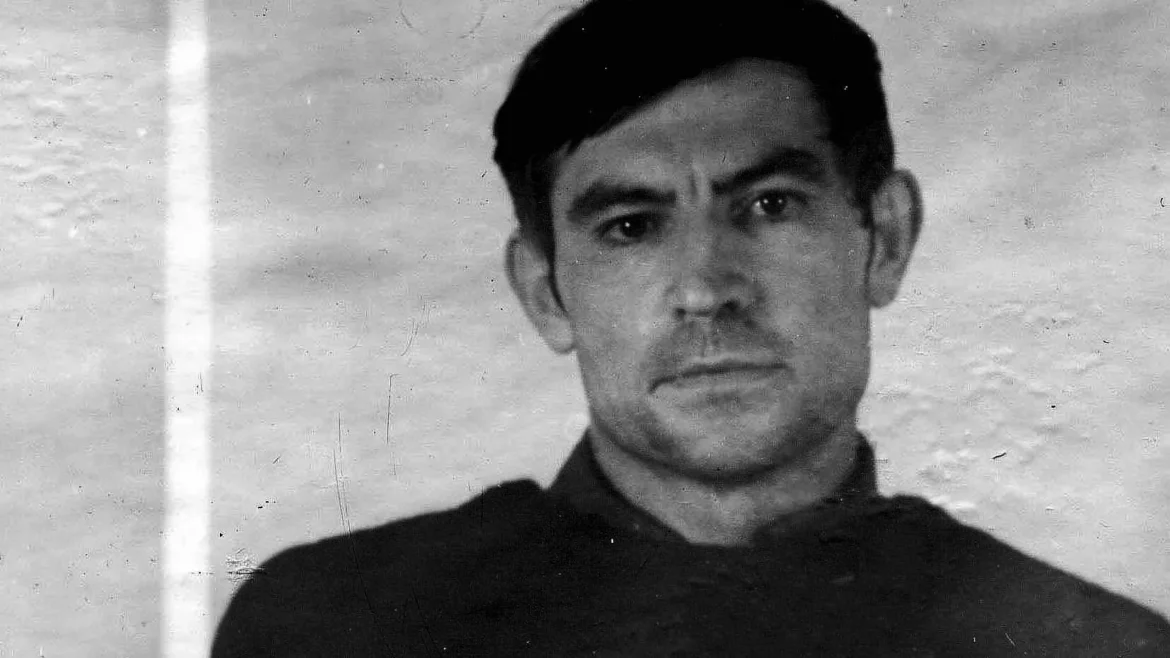
Vladimir Konstantinovich Bukovsky, born December 30, 1942 in Belebey, Bashkir ASSR. Russian.
He was arrested in May, 1963 under Article 190-1 of the Criminal Code of the RSFSR (dissemination of deliberately false fabrications discrediting the Soviet state and social structure). On June 1, 1963, he was sentenced to compulsory psychiatric treatment.
Re-arrested in December 1965 for participation in the preparation of a meeting in defense of Sinyavsky and Daniel. He was again forcibly hospitalized in a psychiatric hospital.
He was arrested on January 22, 1967 for organizing a protest demonstration in Moscow. Sentenced on September 1, 1967 under Art. 190.3 of the Criminal Code of the RSFSR (active participation in group activities violating public order) to three years in a camp.
Arrested on March 29, 1971, by the USSR Council of Ministers’ Department of State Security for Moscow and the Moscow region.
On January 5, 1972 he was convicted by the judicial board for criminal cases of the Moscow City Court under Art. 70(1) of the Criminal Code of the RSFSR (anti-social behaviour). On January 5, 1972 the judicial board of the Moscow City Court sentenced him to two years in prison and five years in exile under Article 70 Part 1 of the RSFSR Criminal Code (anti-Soviet propaganda). He served his sentence in the Vladimir prison, then in the Perm 35 colony.
On December 18, 1976, he was released from further imprisonment, deprived of Soviet citizenship and exchanged for L. Korvalan, General Secretary of the Chilean Communist Party.
On October 30, 1991 he was rehabilitated by the Resolution of the Presidium of the RSFSR Supreme Court “for the absence of crime in his actions”.
There was a rhyme from the 1970s, in the heyday of stagnation in the Soviet Union. “They exchanged a hooligan for Luis Corvalan…”
“Bully” is Vladimir Bukovsky. A dissident, active distributor and author of Samizdat from the early 1960s. Three times tried. He was kept in psychiatric hospitals, prisons and camps, including Perm-35. He spent a total of 12 years in jail and under compulsory treatment.
Author of several books, including And the Wind Returns, Letters of a Russian Traveler, Build a Castle, many articles and essays.
“Political camps had existed there almost from the very beginning of Soviet power… Of course, such a long neighborhood of camps did not go unnoticed by the locals. Several generations of them worked as overseers… The camps were used to being seen as a feeding trough…Over time, the commercial relationship between the convicts and the guards went so far that literally anything could be done for money. Protests, statements, reports of hunger strikes and arbitrariness passed freely to the outside,” Bukovsky wrote in his book And the Wind Returns.
In 1976, the Soviet authorities exchanged Bukovsky for Chilean Communist leader Luis Corvalan, after which Bukovsky moved to Cambridge.
He was nominated as a candidate for president of Russia in the 2008 elections, but was not registered. In 2014, the Russian Foreign Ministry denied Bukovsky Russian citizenship.
He died of cardiac arrest in Cambridge on October 27, 2019. Buried in London.
… And the ending of that famous poem about the hooligan sounded even stronger: “Where would I find such a b… to replace Brezhnev?” It was written by Vadim Delaunay, another dissident writer and poet, who took part in the demonstration on Red Square on August 25, 1968, against the entry of Soviet troops into Czechoslovakia.
FROM HIS PERSONAL FILE
Gajauskas Balis Iono, born on February 24, 1926 in the village of Vigralia, Gražyni parish, Vilkaviškės county, Republic of Lithuania. Lithuanian. Secondary education. Profession (specialty) was electrician.
He was arrested on May 3, 1948 and convicted on September 18, 1948, under article 58-1 “a”, article 58-8, article 58-10 and article 58-11 of the Criminal Code of the RSFSR, to 25 years of correctional labor camps.
He served his sentence in Gulag camps, in Mordovian political camps and in prison no. 2 in Vladimir. On May 3, 1973 he was released after having served his sentence.
He was arrested again on April 20, 1977, and convicted on April 14, 1978, on charges of anti-Soviet agitation and propaganda committed by a person previously convicted of especially dangerous crimes against the state, to 10 years in prison and 5 years in exile. He was recognised as a particularly dangerous recidivist.
He was imprisoned in the Mordovia Special Regime Camp, in the Special Regime Wards of Perm-36 Camp and in the Central Hospital of Perm-35 Camp.
While in detention he was a co-founder of the Helsinki Group in prison. He secretly wrote and sent for samizdat a number of his articles, as well as V. Stus’ poems and the manuscript for I. Gels’ book “The Edge of Culture”. He was regularly punished for not being allowed to buy food from the camp stall or to receive parcels; from 1983 until the end of his sentence he was deprived of the right to receive visits, and was sent to the punishment isolator several times.
On April 19, 1987, he was released from prison after serving his sentence and was exiled to Khabarovsk Territory. Was early released from exile after a mass pardon for political prisoners in October 1988.
In 1989, he was fully rehabilitated, elected deputy of the Seimas, and headed the commission of inquiry into the KGB.
He died on September 28, 2017.
When the massive attack on the Public Museum “Perm 36” began, a NTV crew arrived in Perm and made a series of reports for the programs “Emergency” and “Profession – Reporter. Talking about the museum, they said: “For some reason, museum management decided to give special emphasis to nationalists, who, according to them, fought for peoples’ freedom. And now, on 20 hectares of the former penal colony, there are everywhere stands with photos of convicted accomplices of fascism.
More often than the others in the video flashed photos of the former prisoner of the Perm political camps Balis Gajauskas, then still alive.
Viktar Shmyrov appealed to the Press Complaints Collegium about the stories, in which he wrote:
“In fact, Balis Gajauskas first fought the German occupiers and then the communist regime. He participated in the national underground. He was sentenced to 25 years in a camp. His second sentence was for translation of “Gulag Archipelago” by A. Solzhenitsyn – 10 years for anti-Soviet agitation. If he fought the Nazis in Lithuania, how can he be called an “accomplice of the Nazis”?
In the story there is a picture of Gajauskas with a gun in his hands. In fact, this photo was taken from the Internet. The caption to the photo reads: “Aleksandras Gribinas-Faustas (1920-1949) – one of the “fox brothers”. This is how Balis Gajauskas could look to the archetype”.
That is not a photo of Gajauskas. But the NTV methods of work.
The Press Complaints Collegium wrote in its decision: “The attempt to check the compliance of NTV broadcasts with the main values and principles of the journalistic profession confirms the conclusion of the Collegium that neither the targeted “reportage” from the program Extraordinary Incident nor the multidimensional “journalistic investigation” aired in the program Profession – Reporter have any relation to the named genres or to professional journalism as such.
Site “GULAG. History of one camp” is devoted to the history of Perm-36, the last political zone of the Soviet Union, and the Public Museum, which was created on the remains of this zone by a group of enthusiasts.
Nowadays the museum with all its collections, archives, expositions and exhibitions is seized by the officials from the Ministry of Culture of Perm region.
This project is an attempt to create a universal model of a museum, which exists only in the virtual space and enables almost all kinds of activities of a real museum: scientific, educational, expo-exhibition and excursion.
The initiator of the creation of this resource was the International Coalition of Museums of Conscience, created in 1999, one of the founders of which was the Public Museum “Perm 36”.
© Perm-36, 2023. All rights reserved.